When sanitation fails at its core mission — infection control — cities unknowingly rely on rivers, soils, and ecosystems to finish the job.
Sanitation, beyond preventing environmental pollution, is fundamentally a public-health intervention. Historically, wastewater management began with simply draining contaminated water out of cities. As receiving waters turned into foul-smelling, blackish liquids, mechanical treatment was added — followed later by biological and advanced processes. The underlying aim never changed: 𝗽𝗿𝗼𝘁𝗲𝗰𝘁 𝗽𝗲𝗼𝗽𝗹𝗲 𝗳𝗿𝗼𝗺 𝗴𝗲𝘁𝘁𝗶𝗻𝗴 𝘀𝗶𝗰𝗸.
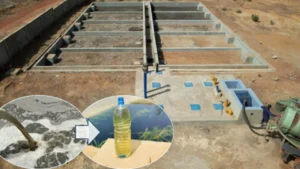
Yet while COD or TSS are visible and routinely monitored, pathogens, antibiotic-resistant bacteria (ARB), antibiotic-resistance genes (ARG), and micropollutants are not. And most treatment plants worldwide are designed mainly to remove organic matter and nutrients. Despite their cost and complexity, final sanitization is often left to natural attenuation after discharge — an often highlighted public-health gap.
At the same time, the antibiotic-resistance crisis accelerates. Developing new antibiotics can take 10–15 years, while bacteria develop resistance within months. This imbalance makes effective sanitation even more critical.
Healthcare facilities are major point sources of pathogens, ARB/ARG, and pharmaceutical residues entering on-site or municipal systems. Conventional disinfection — chlorination or UV — only works with well-pretreated wastewater. But maintaining consistently high pretreatment quality is challenging, especially in decentralized or complex plants. Operators often struggle to provide the conditions required for reliable disinfection.
This is why, under the HEALTH Project, URBANWaters and partners are investigating whether reliable and economically viable disinfection is possible with reduced pretreatment requirements — even with only anaerobically treated wastewater.
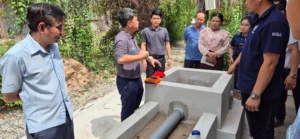
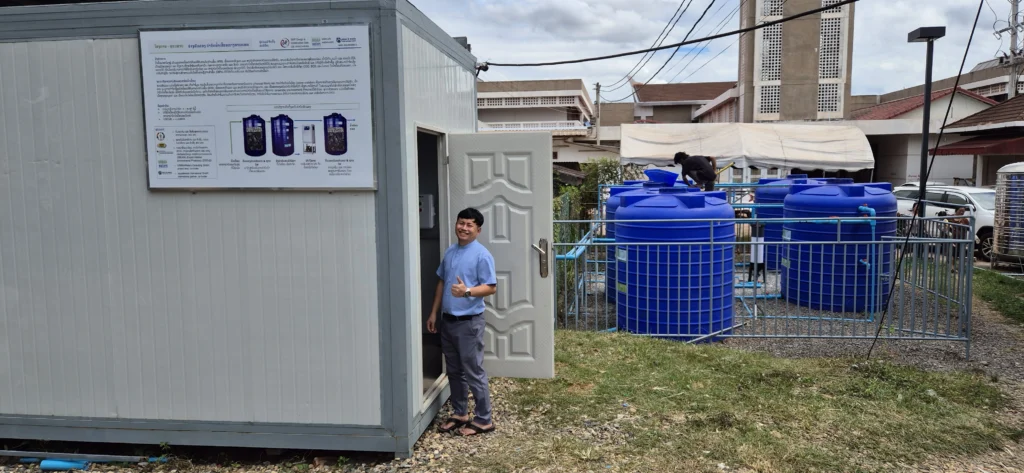
Pilot and lab experiments are underway at a hospital in Laos and a municipal plant in Germany, testing electrochemical oxidation and biologically activated carbon filtration combined with UV-ozone treatment.
Early treatment results are promising, though economics remain context-specific. Final results are expected by April 2026.
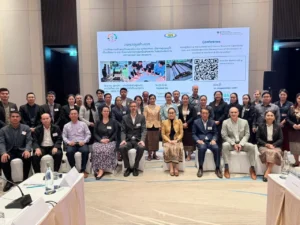
We are proud to lead this project with the Lao Ministry of Health, the Public Works Training Institute (PTI), the German Ministry BMUKN and its Export Initiative Environmental Protection, and aqua&waste international GmbH.